
This article explains how to correctly enter borrower-obligated fees that are paid by a third party (such as a parent, employer, realtor, or other outside party) within the LendingPad Loan Origination System (LOS). Proper entry of these fees is critical to ensuring accurate Finance Charge and APR calculations on the Loan Estimate (LE) and Closing Disclosure (CD).
|
⚠ Critical Compliance Point The APR flag on the Disclosure screen applies to Borrower Paid fees ONLY. If the APR flag is set on a fee that is NOT borrower paid, the flag will be IGNORED when LendingPad calculates the Finance Charge and APR. Incorrect entry can result in APR tolerance violations. |
What Is a Borrower-Obligated Fee?
A borrower-obligated fee is any charge that the borrower is contractually required to pay as part of the loan transaction, regardless of who ultimately provides the funds. Common examples include:
-
Origination charges (e.g., underwriting fee, processing fee)
-
Assignment fee
-
Settlement closing fees
-
Prepaid interest
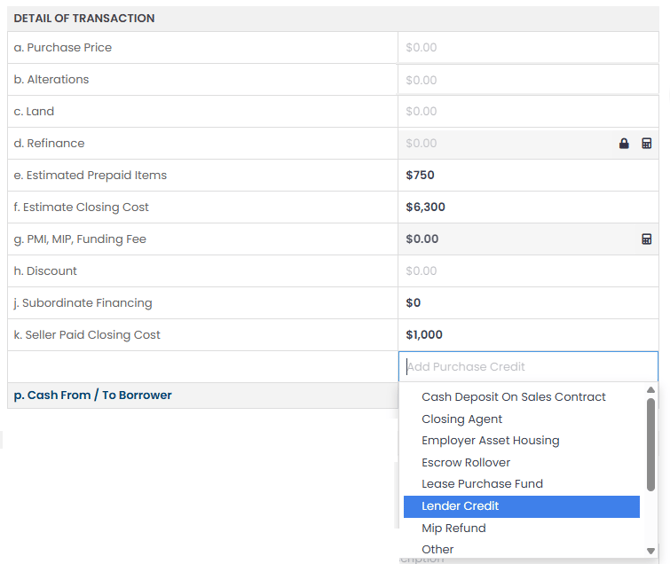
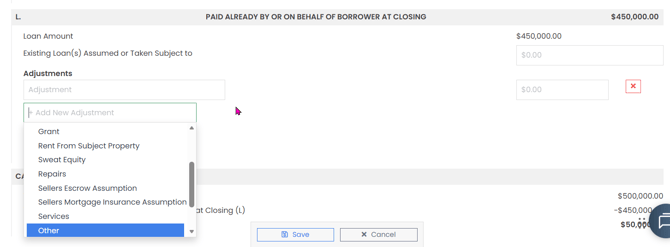
All borrower-obligated fees should be entered on the Disclosure screen and the APR flag set appropriately. If a third party provides funds to satisfy a borrower-obligated fee this portion is captured in the Details of Transaction screen and/or Section L of the Borrower’s Summary.
Regulatory Background
Under Regulation Z (12 CFR § 1026.4), the Finance Charge includes any charge imposed on the borrower as a condition of credit, regardless of who pays the charge. When a third party (with the exception of the Seller) pays a fee on the borrower’s behalf and the borrower is legally obligated for that fee, it must be included in the Finance Charge and therefore reflected in the APR.
|
ℹ Regulatory Reference Regulation Z, 12 CFR § 1026.4 - Finance Charge Definition. Consult your Compliance team or legal counsel for specific guidance on your institution’s APR tolerance policies.
Regulation Z, 12 CFR § 1026.4(c)(5) - Charges excluded from the finance charge - Seller’s points. |
What Is a Third-Party Payer?
A third-party payer is any person or entity other than the borrower who provides funds to satisfy a borrower-obligated fee. Examples include:
-
Parent or family member
-
Employer or relocation company
-
Real estate agent / realtor (seller concession toward closing costs)
-
Non-profit or down-payment assistance program
Why Entry Location Matters for APR
LendingPad uses the entry location of a fee to determine whether it is included in the Finance Charge and APR calculation:
|
Fee Type |
Description |
Entry Location in LendingPad |
APR Flag Effective? |
|
Borrower Paid |
Fees paid directly by the borrower |
Disclosure screen |
Yes — affects Finance Charge & APR |
|
Borrower-Obligated Paid by Third Party |
Obligated borrower fee paid by parent, employer, realtor, seller, etc. |
Loan and Property > Details of Transaction |
NA |
|
Paid by Third Party (NON Borrower-Obligated) |
Fees absorbed entirely by lender, seller, etc. with no borrower obligation |
Disclosure screen |
No |
|
ℹ Note Even if the APR checkbox is selected on the Disclosure screen for a non-borrower-paid fee, LendingPad will not include that fee in the Finance Charge or APR. |